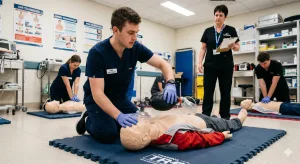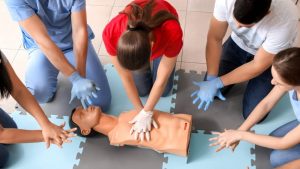

Summary: Maintaining workplace compliance under WSIB Regulation 1101 and the updated CSA Z1210:24 standards is a critical operational requirement for Canadian businesses. Private group first aid training allows organizations to certify their entire staff in a single session, significantly reducing corporate liability and downtime. By choosing an authorized Canadian Red Cross provider, businesses ensure their teams master High-Performance CPR and AED usage in a site-specific environment. Whether for industrial job sites or corporate offices, professional group certification is the definitive standard for safety in Canada.
Strategic Workplace Safety: Professional Group First Aid and CPR Training in Canada
Workplace safety regulations across Canada are rigorous, requiring employers to ensure that certified first aid attendants are physically present at all times during operational hours. Rather than the logistical headache of sending employees one by one to public sessions, a growing number of industry leaders are choosing group first aid training as the most practical and cost-effective solution for large-scale compliance. Private sessions allow companies to align certification with their specific shift schedules, ensuring that every floor and department is protected by a trained responder.
At Coast2Coast First Aid & Aquatics, our private and group programs are tailored for teams of all sizes, from small dental clinics to massive logistics warehouses. Whether you are managing a high-risk construction crew in Alberta or a corporate headquarters in the Greater Toronto Area, our instructors provide a clinical standard of education that meets the latest national requirements. This guide explores the logistical benefits, technical standards, and financial incentives associated with private safety certification in 2026.
The Advantage of Site-Specific Emergency Training
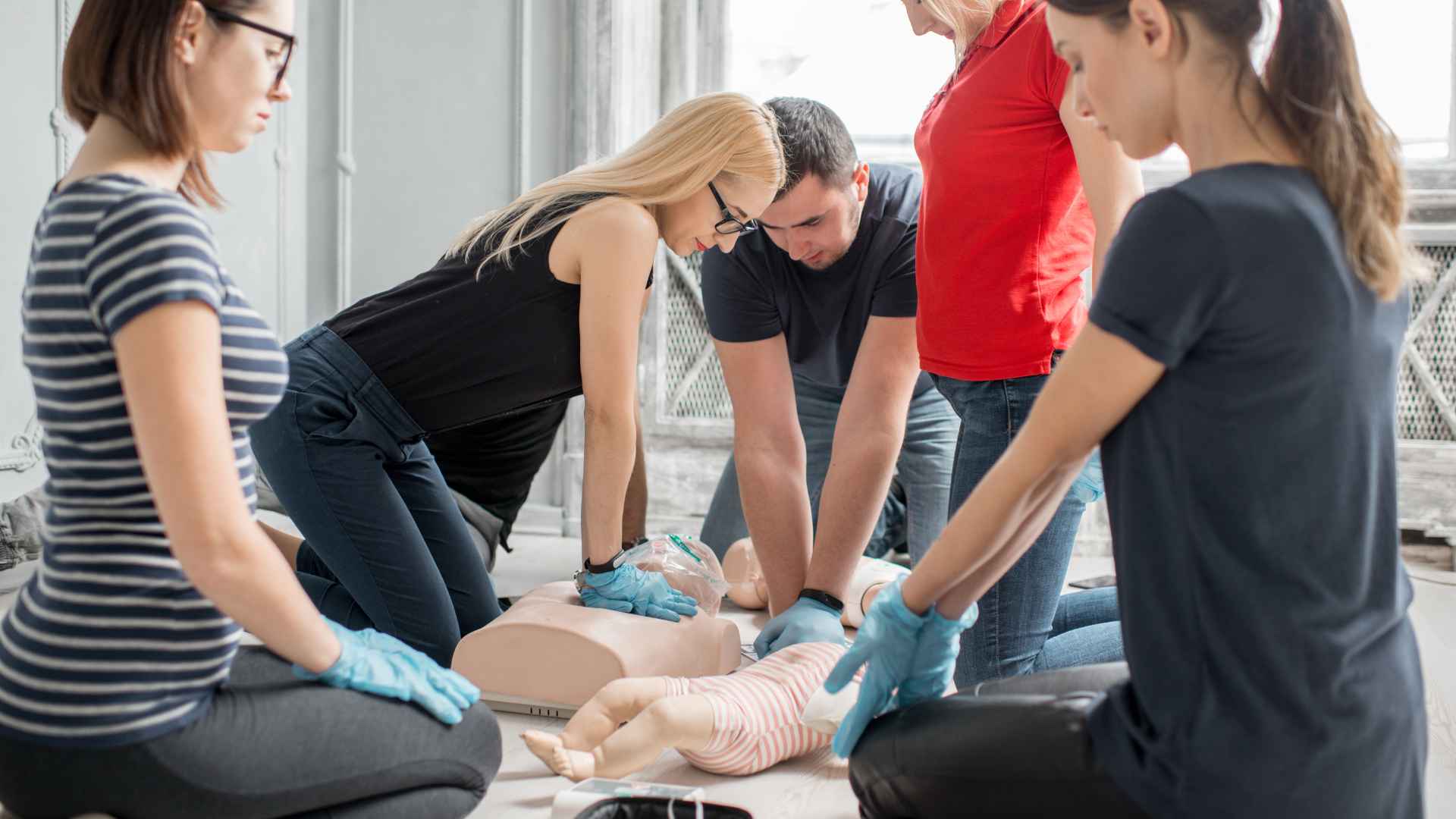
Group or private training is a dedicated educational session arranged exclusively for your organization. Unlike a public classroom where students come from dozens of different backgrounds, your team trains together in a focused environment. While the clinical core and Canadian Red Cross standards remain identical to our public offerings, the delivery is customized to address the specific “Red Zones” and hazards of your workplace.
Many Canadian employers prefer on-site training because it effectively eliminates employee travel time and minimizes operational disruption. More importantly, it allows the instructor to physically walk the floor and incorporate your specific Automated External Defibrillator (AED) locations and first aid kit placement into the drills. A manufacturing facility in Mississauga might focus heavily on severe bleeding control and tourniquet application, while a private school in Ottawa may prioritize pediatric choking response and anaphylaxis protocols.
National Compliance: WSIB Regulation 1101 and CSA Standards
In Canada, workplace safety is governed by strict provincial boards. In Ontario, the Workplace Safety and Insurance Board (WSIB) enforces Regulation 1101, which dictates the mandatory ratio of trained responders based on headcount per shift. For most workplaces with more than five employees, at least one individual must hold a valid Intermediate / Standard First Aid certificate at all times. Failure to maintain these unexpired credentials can lead to severe fines and massive corporate liability in the event of a workplace accident.
In 2026, all training must align with the CSA Z1210:24 standards, which harmonize first aid levels across Canada into “Basic,” “Intermediate,” and “Advanced” categories. By booking a private session, you ensure your entire documentation trail is uniform, making it significantly easier to navigate WSIB audits or Ministry of Labour inspections. Coast2Coast also provides summarized reporting to HR departments, confirming that every staff member has successfully passed their written examination and skills test.
The Science of Survival: High-Performance CPR for Teams
Modern resuscitation has evolved into a data-driven science. During our group sessions, we emphasize High-Performance CPR, which focuses on maximizing the Chest Compression Fraction (CCF). CCF is the percentage of total rescue time spent actively performing chest compressions. Resuscitation data proves that in a workplace setting—especially in high-rises where paramedics face a “Vertical Response Delay”—maintaining a high CCF is the primary factor in preventing brain death.
Your team will practice on high-fidelity manikins that provide real-time digital feedback on compression depth and rate. We also train your staff on the proper use of barrier devices, such as one-way pocket masks, ensuring rescue breaths are delivered safely and hygienically. This hands-on, high-tech approach ensures that your employees are not just “certified,” but clinically capable of performing under the extreme psychological stress of a real life-or-death crisis.
Watch: Essential Workplace First Aid Skills
Professional Requirements for High-Risk Canadian Industries
Specific industries in the Canadian economy have unique certification prerequisites that go beyond basic workplace compliance. Our group sessions are frequently customized for the following professional niches:
- Security Guards & Concierge Staff: Must maintain unexpired Intermediate / Standard First Aid certificates to keep their provincial security licenses valid.
- Daycare & Early Childhood Educators: Legally required to hold CPR Level C to manage pediatric emergencies like infant choking and anaphylaxis.
- Construction & Industrial Foremen: Require training in massive trauma management, tourniquet use, and oxygen administration on high-risk sites.
- Healthcare & Dental Teams: Require annual Basic Life Support (BLS) to master team-based clinical resuscitation protocols.
- Property Management: Personnel in high-density residential towers are the first line of defense during cardiac events.
Financial Incentives: Government Grants and Reduced Insurance
Many Canadian business owners are unaware that the cost of group safety training can often be offset by government funding. In Ontario, the Canada-Ontario Job Grant provides direct financial support to individual employers who wish to purchase training for their employees. Coast2Coast is an authorized third-party trainer under these programs, meaning your organization may qualify for thousands of dollars in reimbursement for your group sessions.
Beyond grants, maintaining a 100% certified staff and a documented AED program is a powerful risk-mitigation factor recognized by commercial liability insurers. Many providers offer “Safety Credits” that lower annual premiums for businesses that can prove a high state of emergency readiness. This creates a clear ROI for your training investment, making safety a contributor to your financial health.
Flexible Learning Models: Blended and Traditional Options
We understand that modern Canadian companies lead demanding schedules. To maximize productivity, we offer a highly popular blended online learning format for group bookings. In this hybrid model, your employees complete the heavy medical theory online at their own pace. Once finished, they attend a shortened, fast-track in-person session at your facility focused entirely on their practical skills assessment.
If your team holds certificates that are nearing their strict three-year expiry date, our streamlined recertification courses provide a rapid review of the latest 2026 guidelines. This ensures your workforce remains legally compliant and clinically ready without retaking the full multi-day program.
Book Your Private Group Training Today
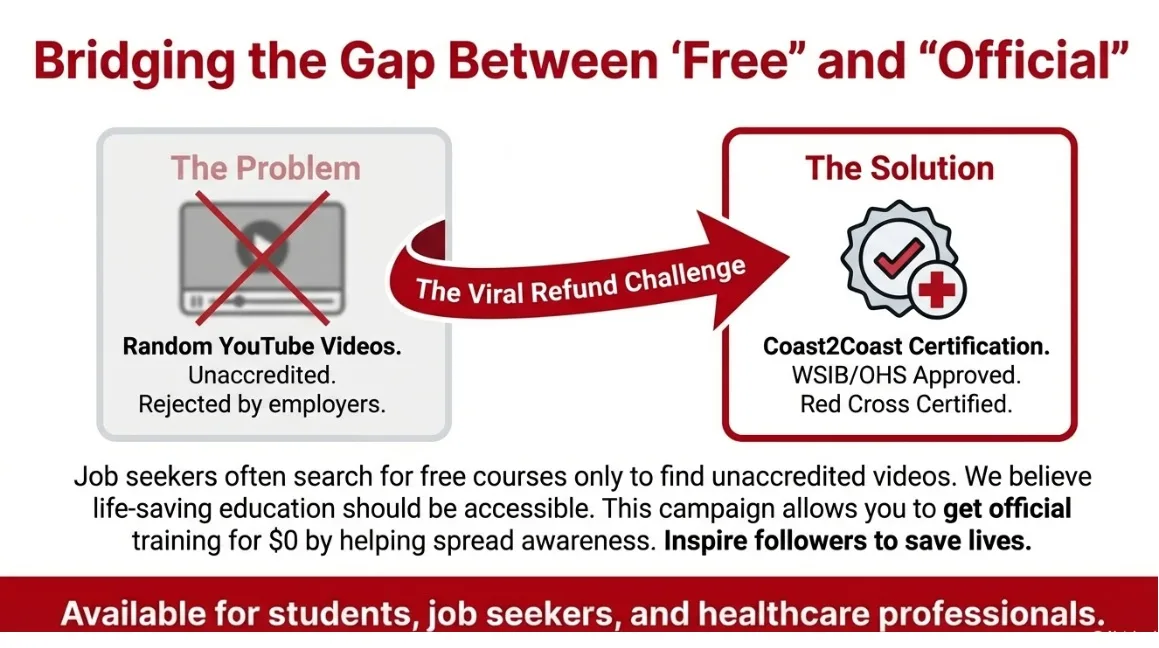
Protect your team, lower your liability, and ensure 100% WSIB compliance. Register for a WSIB-approved group course and secure the safety of your workplace in 2026.
Frequently Asked Questions
Question 1: What is the minimum group size for private training?
Answer: Coast2Coast requires a minimum of 4 participants for a private session at our facility and typically 8 participants for on-site training at your workplace.
Question 2: Can the instructor come to our office on a weekend?
Answer: Yes. One of the primary benefits of private group bookings is scheduling flexibility. We offer sessions on weekdays, evenings, and weekends to match your shift patterns.
Question 3: Is the certification from a group course the same as a public one?
Answer: Absolutely. Group participants receive the exact same Canadian Red Cross certification, which is recognized by WSIB, OHS, and all major Canadian employers.
Question 4: How long is a group first aid certificate valid?
Answer: Most first aid and CPR certifications are valid for exactly three years. You must take a recertification course before the expiry date to remain legally compliant.
Question 5: Does the training include Automated External Defibrillator (AED) usage?
Answer: Yes. Comprehensive AED training is a mandatory, core component of every first aid and CPR course we offer for businesses.
Question 6: What is WSIB Regulation 1101?
Answer: This is the Ontario provincial law that mandates exactly how many certified first aiders and first aid kits must be present in every workplace based on employee count per shift.
Question 7: Can my staff complete their training entirely online?
Answer: No. While theory can be done online, a physical practical skills assessment with a certified instructor is legally required for a valid WSIB/OHS certificate.
Question 8: Do security guards need specific training?
Answer: Yes. To maintain an Ontario security guard license, personnel must hold a valid Intermediate / Standard First Aid and CPR Level C certificate.
Question 9: What is Chest Compression Fraction (CCF)?
Answer: CCF is the percentage of total rescue time spent performing compressions. Higher CCF leads to much higher survival rates, which is a core focus of our 2026 High-Performance training.
Question 10: Are barrier devices provided for rescue breathing practice?
Answer: Yes. For strict hygiene and safety, Coast2Coast provides single-use barrier devices and training masks for all students during the session.
Question 11: How quickly do we receive our digital certificates?
Answer: Digital Canadian Red Cross certificates are typically issued via email within 24 to 48 hours after the successful completion of the course.
Question 12: Is there a written examination required for group sessions?
Answer: Yes, a multiple-choice written examination is required to verify the staff’s understanding of the 2026 CSA standards and medical protocols.
Question 13: What should be in a 2026 workplace first aid kit?
Answer: Under CSA standards, your kit must match your workplace hazard level (Type 1, 2, or 3). It must include bandages, gauze, tourniquets, and barrier devices.
Question 14: Does workplace first aid training lower corporate insurance?
Answer: Yes. Many commercial insurers recognize a fully certified staff as a proactive risk-mitigation factor and may offer significant premium reductions.
Question 15: How do we apply for government training grants?
Answer: Coast2Coast can provide the necessary quotes and curriculum details for the Canada-Ontario Job Grant. You must apply through the provincial portal before your training begins.