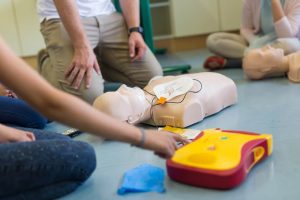

Workplace CPR training in Brampton reduces injury severity, lowers workers’ compensation claims, reduces legal risks, and improves employee confidence. Under WSIB Regulation 1101, workplaces with 1 to 5 employees must have Emergency First Aid coverage and workplaces with 6 or more must have Intermediate / Standard First Aid coverage during all working hours. Failure to comply can result in Ministry of Labour fines and increased insurance premiums. Group CPR training is the most cost-effective option for Brampton businesses.
✓ Canadian Red Cross Certified
Group CPR Training for Brampton Workplaces
Emergency First Aid, Intermediate / Standard First Aid, CPR Level C, and BLS for Brampton businesses. Instructors come to your workplace with all equipment. Weekday, evening, and weekend formats available.
Workplace Benefits for CPR Training: The Core Case
CPR training is one of the most valuable investments a Brampton employer can make. A well-trained workforce in CPR and first aid fosters a culture of safety, leading to increased employee confidence and a proactive approach to workplace hazards. Training employees in CPR can significantly increase the chances of survival during cardiac emergencies, as immediate action can be the difference between life and death. In the critical minutes before professional help arrives, trained employees are the most important link in the chain of survival.
Brampton is one of Canada’s fastest-growing cities, with a workforce spanning manufacturing, construction, logistics, healthcare, retail, and professional services. Across all of these industries, the workplace benefits of CPR training extend far beyond regulatory compliance. They include reduced legal risks, lower insurance premiums, improved employee morale, faster emergency response times, and a safer environment for everyone in the workplace.
The workplace benefits for CPR training are both immediate and long-term. Having a significant number of employees trained in CPR can lead to faster emergency response times, which can reduce recovery time and minimize the severity of injuries. Companies that implement comprehensive first aid training can experience lower workers’ compensation claims and reduced medical costs, as prompt treatment of injuries can prevent them from escalating into more serious health issues.
A well-trained workforce in first aid and CPR fosters a culture of mutual responsibility and care, enhancing employee engagement and job satisfaction. Providing health training boosts employee morale and reduces staff turnover by signaling that management prioritizes worker well-being. Having a workforce that is 80 to 90 percent CPR trained can demonstrate that a company values safety, which can lead to increased employee satisfaction and engagement. Employees who receive CPR and first aid training feel more empowered and confident in their ability to respond to emergencies, which leads to a more proactive workplace culture.
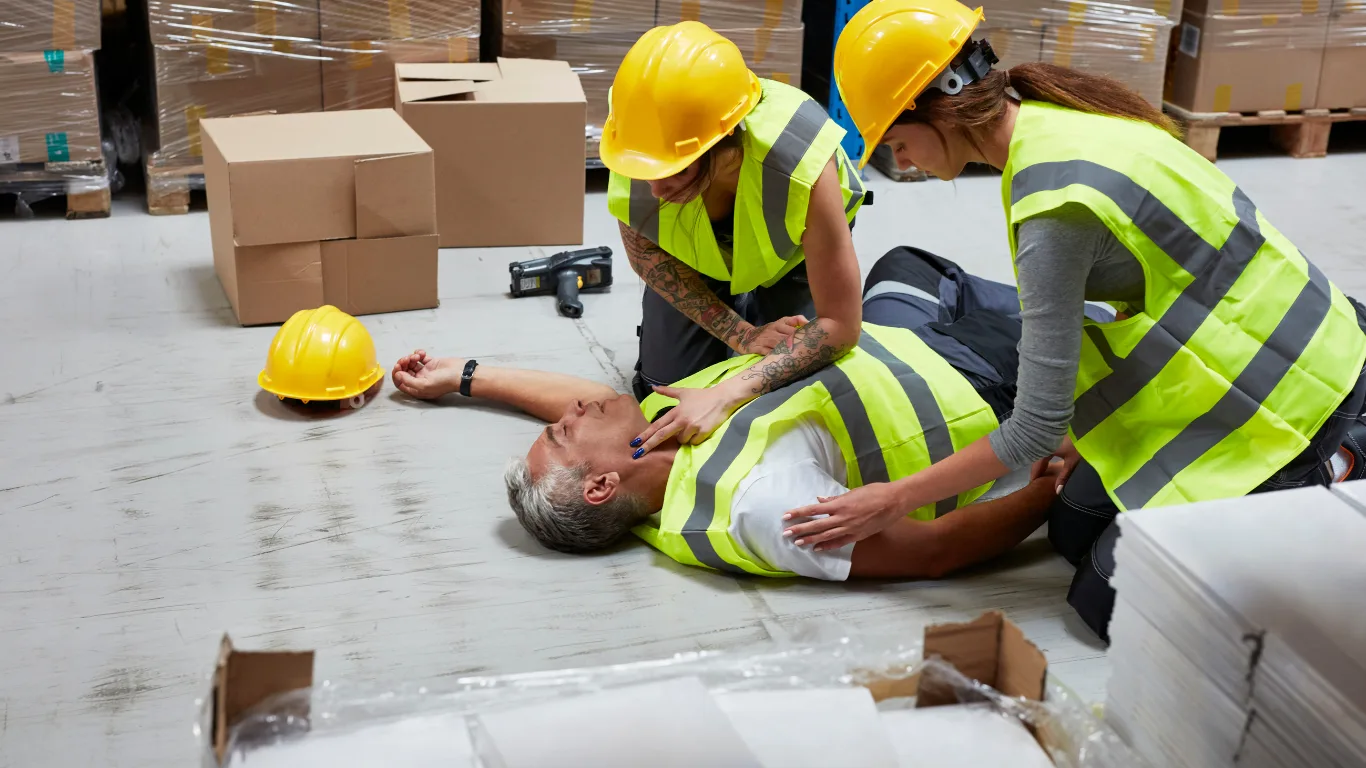
CPR Training and Workplace Safety: What Ontario Law Requires
Many jurisdictions mandate that businesses have a specific number of certified first aiders on-site to adhere to occupational health and safety standards. Programs ensure compliance with local occupational health laws, such as provincial workplace regulations and national labour codes. Providing CPR training meets local occupational health and safety regulations and lowers workplace liability and legal risks.
Under Ontario’s Workplace Safety and Insurance Board (WSIB) Regulation 1101, employers are legally required to ensure that a proportional number of employees hold valid Canadian Red Cross first aid and CPR certification based on the size of the workforce and the hazard level of the workplace. Failure to comply with WSIB regulations regarding first aid coverage can result in severe financial fines from the Ministry of Labour, increased workers’ compensation premiums, and heightened legal liability in the event of a workplace injury.
Aid Training and WSIB Regulation 1101
WSIB Regulation 1101 specifies that workplaces with one to five employees must have at least one staff member trained in Emergency First Aid, while those with six or more employees must have at least one certified Intermediate / Standard First Aid responder available during all active working hours. In Brampton’s high-risk industries including construction, manufacturing, and logistics, multiple trained staff members may be required to meet the 120-second response rule.
Failure to comply with WSIB regulations can result in potential fines from the Ministry of Labour, increased insurance premiums, and being held responsible for workplace injuries that could have been mitigated with proper first aid coverage. Businesses that are legally required to maintain first aid coverage and fail to do so face both financial penalties and reputational damage. Staying compliant protects the business, protects workers, and demonstrates that the company cares about the people it employs.
Employee Confidence and a Positive Work Environment
One of the most significant workplace benefits of CPR training is the impact on employee confidence and workplace culture. A well-trained workforce in CPR and first aid fosters a culture of mutual responsibility and care. Offering CPR training enhances team cohesion and communication through simulated medical scenarios that require staff members to work together under pressure.
When employees know they are trained and prepared to handle emergencies, they bring a sense of calm and purpose to the work environment that extends beyond emergency situations. Increased awareness of safety hazards, correct use of first aid kits and aid equipment, and confidence in responding to a medical emergency all contribute to a more positive work environment.
Increase Employee Confidence Through First Aid and CPR
Training in CPR and first aid equips employees with essential skills that can boost their confidence and sense of preparedness in high-pressure situations. Employees who receive CPR and first aid training feel more empowered and confident in their ability to respond to emergencies, which leads to a more proactive approach to workplace safety overall.
This increased confidence extends beyond the workplace into personal lives. Employees with first aid and CPR certification carry their skills into their communities, protecting family members and neighbors. A well-trained workforce contributes to community safety well beyond the walls of the workplace, creating a culture of mutual responsibility that benefits Brampton as a whole.
Learn This Skill in a Real Classroom
CPR Level C and AED Training
Canadian Red Cross CPR Level C covers adult, child, and infant CPR, AED deployment, rescue breaths, and choking response. The most widely required CPR certification in Ontario. WSIB approved.
Emergency First Aid Response: Reducing Injury Severity
In any workplace emergency, the critical minutes between the onset of a medical event and the arrival of professional help determine the outcome. Having trained employees on staff means that cardiac arrest, severe bleeding, choking, and other life-threatening workplace incidents receive immediate intervention rather than waiting for paramedics to arrive.
Having a significant number of employees trained in CPR can lead to faster emergency response times, which can reduce recovery time and minimize the severity of injuries. When an injury occurs, trained employees can apply direct pressure to control bleeding, perform chest compressions during cardiac arrest, manage a choking victim with back blows and abdominal thrusts, and use an AED to restore a normal heart rhythm. Each of these interventions reduces the severity of the medical event and improves the chances of a full recovery.
Workplace accidents in high-risk industries like construction and manufacturing can result in severe injuries where seconds matter. A quick response from a trained staff member can prevent a workplace injury from escalating into a life-altering or fatal event. Companies that implement comprehensive first aid training can experience lower workers’ compensation claims and reduced medical costs, as prompt treatment of injuries can prevent them from escalating into more serious health issues.
Group Training: Building Team Cohesion Through CPR Courses
Group CPR training can serve as a team-building experience, boosting morale as employees learn together and see their coworkers investing time in learning essential skills. When a team trains together, they develop a shared understanding of emergency procedures, clear communication habits, and mutual accountability for workplace safety.
Offering CPR training enhances team cohesion and communication through simulated medical scenarios. Participants work through realistic workplace emergency scenarios, learning to assign roles, communicate clearly under pressure, and execute CPR and first aid procedures as a coordinated team rather than as individuals acting in isolation.
Private group training brings certified Canadian Red Cross instructors and all equipment directly to your Brampton workplace. This eliminates the need to send employees to external training facilities, minimizes disruption to operations, and allows the training to be tailored to the specific risks and hazards present in your work environment. Weekday, evening, and weekend scheduling is available to accommodate shift-based workforces.
Train Your Whole Team
Private Group Training for Brampton Businesses
Coast2Coast brings certified instructors and all equipment directly to your Brampton workplace. Training tailored to your industry’s specific risks. Ideal for construction, manufacturing, logistics, offices, and healthcare. WSIB approved.
Aid and CPR Training: Financial and Legal Benefits for Employers
Investing in first aid and CPR training can lead to significant financial benefits, including reduced liability exposure and lower corporate insurance premiums, as insurers often provide discounts to businesses that demonstrate a commitment to safety training. Having trained first aiders on staff can mitigate legal risks and reduce the likelihood of lawsuits, as it demonstrates that the employer has taken proactive measures to ensure employee safety during emergencies.
Failure to comply with WSIB regulations regarding first aid coverage can result in severe financial fines from the Ministry of Labour, increased workers’ compensation premiums, and heightened legal liability in the event of a workplace injury. The cost of group CPR and first aid training is minimal compared to the potential fines, legal consequences, and increased insurance premiums associated with non-compliance or an unmitigated workplace emergency.
Lower Insurance Premiums and Reduced Legal Risks
Insurers often provide discounts to businesses that demonstrate a commitment to safety training through documented certifications and regular refresher training. Providing CPR training meets local occupational health and safety regulations and lowers workplace liability and legal risks. Having trained staff members on site demonstrates that the employer has taken proactive measures, reducing the likelihood of being held responsible for preventable workplace injuries.
Companies that implement comprehensive first aid training can experience lower workers’ compensation claims and reduced medical costs. A well-trained workforce that responds quickly and correctly to workplace incidents reduces the financial impact of workplace accidents on the business, the insurance board, and the broader health system.
Aid Courses and Basic Life Support Options for Brampton Workplaces
Coast2Coast First Aid and Aquatics offers a full range of Canadian Red Cross certified aid courses for Brampton workplaces and individuals. Emergency First Aid (Basic First Aid) is a one-day course covering CPR, AED use, choking response, and severe bleeding control. It is the minimum standard for low-risk Ontario workplaces with 1 to 5 employees. Intermediate / Standard First Aid (Intermediate First Aid) is a two-day comprehensive course required by most workplaces with 6 or more employees.
For healthcare professionals and clinical staff members requiring Basic Life Support, BLS courses provide advanced team-based resuscitation training valid for one year. Refresher training is available for all certification levels to ensure employees stay current with the latest CPR guidelines and safety regulations. Blended learning options allow employees to complete theory online before attending a shorter in-person practical session, making certification accessible for employees with demanding schedules or shift-based work arrangements.
Training options vary depending on the size and risk level of your workplace. Coast2Coast works with Brampton employers to customize training programs to address the specific risks and safety hazards present in their work environment, ensuring that the skills learned are directly applicable to the emergencies your team is most likely to face.
Key Takeaway
Workplace CPR training in Brampton reduces injury severity, lowers workers’ compensation claims, reduces legal risks, and builds employee confidence. WSIB Regulation 1101 requires Emergency First Aid for workplaces with 1 to 5 employees and Intermediate / Standard First Aid for 6 or more. Non-compliance risks Ministry of Labour fines and increased insurance premiums. A workforce that is 80 to 90 percent CPR trained demonstrates safety commitment. Group training is the most cost-effective option and can be delivered at your Brampton workplace. Certifications are valid for three years.
Canada’s Top-Rated Training Partner
Join 150,000+ Canadians Who Are Certified
Coast2Coast is Canada’s largest Canadian Red Cross Training Partner.
4.9 stars across 20,491 Google reviews. Register online in 2 minutes.
Frequently Asked Questions: Workplace Benefits of CPR Training Brampton 2026
Q1: What are the main workplace benefits of CPR training?
A: The main workplace benefits for CPR training include faster emergency response times, reduced injury severity, lower workers’ compensation claims, reduced legal risks, lower insurance premiums, and increased employee confidence. A well-trained workforce in CPR and first aid fosters a culture of mutual responsibility and care, enhancing employee engagement and job satisfaction. Training in CPR equips employees with essential skills that boost confidence and create a more positive work environment.
Q2: Is CPR training legally required for Brampton workplaces?
A: Yes. Under Ontario’s WSIB Regulation 1101, employers are legally required to ensure that a proportional number of employees hold valid Canadian Red Cross first aid and CPR certification based on the size of the workforce and the hazard level of the workplace. Workplaces with 1 to 5 employees must have at least one Emergency First Aid certified staff member, while workplaces with 6 or more must have at least one Intermediate / Standard First Aid certified responder on site during all working hours.
Q3: What happens if a Brampton workplace does not comply with WSIB first aid requirements?
A: Failure to comply with WSIB regulations regarding first aid coverage can result in severe financial fines from the Ministry of Labour, increased workers’ compensation premiums, and heightened legal liability in the event of a workplace injury. Non-compliant employers can be held responsible for injuries that could have been mitigated with proper first aid coverage. The financial cost of potential fines and legal consequences far exceeds the cost of group training.
Q4: How does CPR training reduce workers’ compensation claims?
A: Companies that implement comprehensive first aid training can experience lower workers’ compensation claims and reduced medical costs, as prompt treatment of injuries can prevent them from escalating into more serious health issues. Having trained employees who respond quickly and correctly to workplace incidents reduces the severity of injuries, shortens recovery time, and prevents workplace accidents from generating significant insurance board compensation claims.
Q5: How does CPR training improve employee confidence?
A: A well-trained workforce in CPR and first aid fosters a culture of safety, leading to increased employee confidence and a proactive approach to workplace hazards. Employees who receive CPR and first aid training feel more empowered and confident in their ability to respond to emergencies. Training equips employees with essential skills that boost confidence in high-pressure situations, both in the workplace and in their personal lives.
Q6: What is group CPR training and how does it benefit Brampton businesses?
A: Group CPR training is a private training session where a certified instructor comes to your workplace with all equipment and trains your team together. Group CPR training can serve as a team-building experience, boosting morale as employees learn together. It is the most cost-effective option for Brampton businesses, eliminates travel for employees, and allows training to be tailored to the specific risks and safety hazards in your work environment.
Q7: Can CPR training lower business insurance premiums?
A: Yes. Investing in first aid and CPR training can lead to significant financial benefits, including reduced liability exposure and lower corporate insurance premiums, as insurers often provide discounts to businesses that demonstrate a commitment to safety training. Having trained first aiders on staff mitigates legal risks and reduces the likelihood of lawsuits, demonstrating that the employer has taken proactive measures to ensure employee safety during emergencies.
More FAQs: Training Options, Compliance, and Workplace Safety
Q8: What first aid course does my Brampton workplace need?
A: WSIB Regulation 1101 specifies that workplaces with 1 to 5 employees must have at least one Emergency First Aid certified staff member. Workplaces with 6 or more must have at least one Intermediate / Standard First Aid certified responder on site during all working hours. High-risk industries including construction, manufacturing, and logistics in Brampton may require a higher ratio of trained staff to meet the 120-second response rule.
Q9: How does CPR training create a safer work environment?
A: A well-trained workforce fosters a culture of mutual responsibility and care. Increased awareness of safety hazards, correct use of first aid kits and aid equipment, and confidence in handling workplace emergencies all contribute to a more positive work environment where safety is a top priority. When employees know that their colleagues are trained to respond to a medical emergency, it creates a safer environment for everyone.
Q10: What is the 120-second rule for Brampton workplaces?
A: WSIB requires that a certified first aider must be able to reach any injured worker within 120 seconds during all working hours. In large Brampton facilities, multi-floor buildings, or spread-out construction sites and logistics warehouses, this often requires training a higher number of staff members than the minimum. Employers must audit their facility layout and shift coverage to ensure the 120-second standard can be met at all times.
Q11: How does CPR training affect employee morale and job satisfaction?
A: Providing health training boosts employee morale and reduces staff turnover by signaling that management prioritizes worker well-being. A well-trained workforce fosters a culture of mutual responsibility and care, enhancing employee engagement and job satisfaction. When employees feel that their employer is committed to their well-being through safety training, it fosters a sense of security and loyalty. Group CPR training also serves as a team-building experience that strengthens workplace relationships.
Q12: What are refresher training options for Brampton workplaces?
A: Refresher training is available for all certification levels to ensure employees stay current with the latest CPR guidelines and safety regulations. Canadian Red Cross first aid certifications are valid for three years and BLS certifications are valid for one year. Many Brampton employers schedule annual refresher sessions even within the three-year validity period to maintain proficiency and demonstrate ongoing safety commitment.
Q13: How does CPR training reduce legal risks for Brampton employers?
A: Having trained first aiders on staff mitigates legal risks and reduces the likelihood of lawsuits, demonstrating that the employer has taken proactive measures to ensure employee safety. Providing CPR training meets local occupational health and safety regulations and lowers workplace liability. Employers who cannot demonstrate first aid compliance can be held responsible for workplace injuries that could have been prevented with proper coverage.
Q14: Can CPR training be tailored to specific workplace risks in Brampton?
A: Yes. Coast2Coast works with Brampton employers to customize training programs that address the specific risks and safety hazards in their work environment. Construction sites focus on trauma response and AED use. Manufacturing facilities cover tourniquet application and wound packing. Office environments emphasize cardiac arrest recognition and AED deployment. Training options vary depending on the size, industry, and hazard level of the workplace.
Q15: Where can Brampton businesses book group CPR and first aid training?
A: Coast2Coast First Aid and Aquatics offers Canadian Red Cross certified group CPR training, Emergency First Aid, Intermediate / Standard First Aid, and BLS courses for Brampton businesses. Private group training brings certified instructors and all equipment directly to your workplace. Weekday, evening, and weekend scheduling is available. Blended learning options are also available for individual employees. Contact Coast2Coast to discuss training options for your team.
The information in this article is for educational and informational purposes only and does not constitute legal or occupational health and safety advice. WSIB regulation requirements vary by workplace type, industry, and workforce size. Always verify current requirements with WSIB or your provincial occupational health and safety authority before making compliance decisions. Coast2Coast First Aid Inc. assumes no liability for outcomes resulting from reliance on information in this article.
Written and reviewed by Ashkon Pourheidary, B.Sc. (Hons) Neuroscience, Co-Founder, Coast2Coast First Aid and Aquatics. Ashkon has been a certified First Aid and CPR instructor since 2011 and an Instructor Trainer since 2013. He is a certified EMR instructor, Psychological First Aid instructor, and BLS instructor, and has served on the First Aid Council for the Canadian Red Cross. Workplace first aid requirements sourced from WSIB Regulation 1101, CSA Z1210:24, and the Ontario Occupational Health and Safety Act. Coast2Coast First Aid Inc. is Canada’s largest Canadian Red Cross Training Partner. Last reviewed: March 2026. Contact info@c2cfirstaidaquatics.com or 1-866-291-9121.